



If you’ve ever sat at a roulette table watching red hit five times in a row and thought, “Black has to be next,” and doubled your bet, you’ve already met the Martingale strategy, even if you didn’t know its name.
This betting method has been around for centuries, promising simple logic and fast recoveries. Win one, lose two, double down, get it all back. Rinse, repeat, retire early. At least, that’s how it sounds at first.
But ask anyone who’s chased losses into the early hours, and they’ll tell you: Martingale is as risky as it is seductive. Some swear by it. Others swear at it. Casinos build table limits around it. Crypto bots automate it.
And if you want to understand the system and pick a side in this love-hate relationship, you’re in the right place. We’ll discuss every detail about the Martingale betting strategy and start from the basics.
What even is the Martingale betting system?
The Martingale strategy is one of the simplest betting systems out there and also one of the most argued about. At its core, it’s just this: keep doubling your bet after every loss. That way, when you finally win, you recover everything you lost, plus make a small profit.
Let’s say you start with a $10 wager on red in roulette. You lose. Next round, you bet $20. Lose again? Bet $40. Keep betting on red until it hits. When it does, your win covers all previous losses and nets you that original $10. Feels bulletproof – until you experience a long losing streak and either run out of money or hit the table limit.
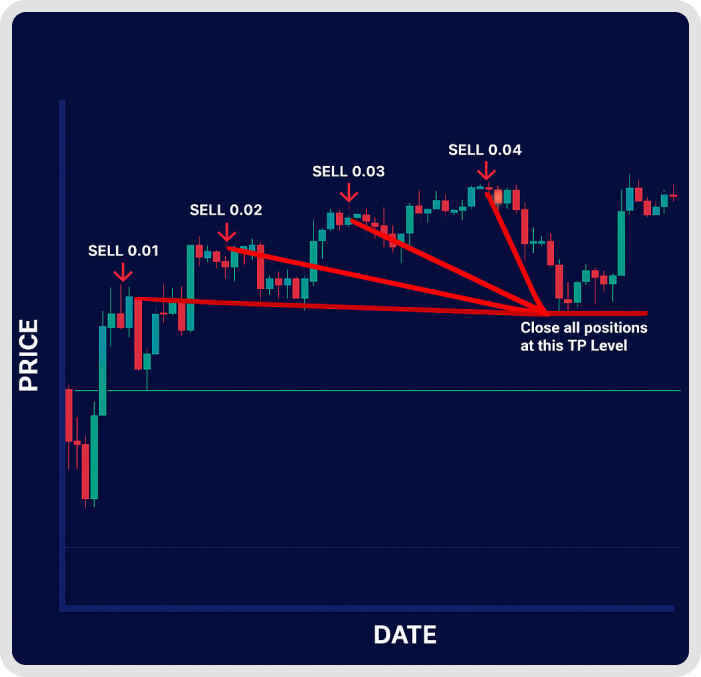
It works best with bets that pay 1:1, like red/black or odd/even in roulette. Some people use it for blackjack, baccarat, or even sports bets and forex trading. But the appeal is always the same: win once, and you’re back on top.
One of the most interesting things about this system is that it’s been used for centuries and never gets old.
How did a system this basic make its way from candlelit roulette halls to TikTok? Let’s roll back a few hundred years.
A quick dive into history: From 18th-century France to online casinos
The Martingale strategy traces back to the 18th century France, where it gained popularity among gamblers in roulette halls. Back then, casinos weren’t the high-tech palaces they are now — just smoky rooms, spinning wheels, and wealthy men chasing an easy system.The name “Martingale” may have been slang for “foolish” in French (but it meant a ruder word unrelated to gambling. Ask Google😉). So, it feels a bit on-the-nose for anyone who’s ever blown through their entire bankroll thinking a win was due.

The idea spread fast. It was simple, catchy, and made gamblers feel like they’d cracked the code. Then it crossed over from gambling to finance. Some traders began using “martingale” logic to double down on losing positions, assuming the market would bounce back. Spoiler: This got a lot of people into trouble, especially during unpredictable crashes.
In today’s online world, people still use the Martingale strategy everywhere, from crypto traders doubling investments after dips to TikTok influencers promoting it as a “guaranteed win” strategy in roulette livestreams. It’s a system that keeps coming back, no matter how many times it proves risky.
But why? It’s all in our heads.
The psychology: Why people stick to the Martingale strategy
First of all, the Martingale strategy is simple. And simple is often catchy, like that “APT” song. But it doesn’t stick around just because it’s simple. It taps into something deeper — our obsession with “getting even.”
When people lose money, their instinct is to fix it fast. The Martingale gives them a plan: double up, stay in the game, and you’ll win it all back. That sense of control feels good, even when the odds aren’t on your side. It’s not really about logic. It’s about the illusion of logic.
Behavioral economists call this loss aversion — the idea that losing hurts more than winning feels good. People don’t just want to win; they want to undo the pain of losing. The Martingale is built for that exact mindset. It turns each loss into what looks like a setup for a comeback.
Add in the gambler’s fallacy, which is the belief that a win is “due” after a string of losses, and you’ve got the perfect storm. Someone sees black come up six times in roulette and feels certain red is next. So they double down. Then double again. Before they know it, they’re ten bets deep and sweating through their shirt.
And it’s not just casual bettors. In 2023, Reddit forums like r/sportsbook were filled with posts from people using Martingale-style chase strategies on same-game parlays and live bets. One bettor even shared how they lost $3,100 in a single attempt to just get back to even.
So why do people keep doing it?
Because the Martingale offers a sense of redemption when you feel like you can’t lose forever.
But feelings and facts rarely get along, especially at the roulette table.
Numbers don’t lie: What the stats say
The Martingale strategy sounds bulletproof until you run the math. And when you do, the cracks show.
Probability vs. reality
The core idea is this: if you double your bet after each loss, eventually you’ll win and cover everything. But that “eventually” can sneak up with a nasty price tag.
Let’s say you use the Martingale roulette strategy. European roulette has 18 red numbers, 18 black, and one green zero, so the chance of winning and hitting red is 18/37, or about 48.65%. That means there’s a 51.35% chance you don’t hit red.
The odds of losing once? 51.35%. The odds of losing twice in a row? About 26.4%. Lose three in a row? 13.6%. Seven in a row? 0.75% — not huge, but not rare either.
Now here’s the thing: by that seventh loss, your next bet has jumped from $10 to $1,280. And all of that for… a $10 win. That’s what presents the main problem with the Martingale strategy.
Exponential loss vs. linear gain
That’s the heart of the Martingale problem: your losses grow fast, your gains stay tiny. You risk thousands to make the same $10 you started with. Mathematicians call this a negative expected value strategy, and it’s exactly why casinos allow using the Martingale system. They know the system can’t outpace the house edge in the long run.
Even with an infinite bankroll, you’re not safe. Table limits exist for a reason. If the table max is $5,000, your doubling streak can only go so far before you hit a hard stop.
This is called risk of ruin — the chance that you’ll lose your entire bankroll before the system works. To keep the chance of ruin under 10% over 5,000 plays, a bettor needs a bankroll over 65,000 times their initial bet — a number most people can’t touch.
Still, that doesn’t stop people from using it everywhere, and not just in casino games.
Where people use the Martingale system: Roulette, blackjack, crypto betting & beyond
The Martingale strategy was built for even-money bets, and that’s where it still finds a home. But these days, it’s gone far beyond red vs. black.
Roulette: The classic red/black grind
The Martingale strategy was made for roulette. The bet structure is perfect: red or black, odd or even, 1–18 or 19–36. You’re paid 1:1, and the outcome feels close to 50/50. But thanks to that little green zero, the odds are tilted just enough to make it dangerous.
It’s not uncommon to find YouTube videos of players hitting 7 or 8 losses in a row while doubling their bet, only to max out the table limit or their wallet. Sure, they also win occasionally, but…you’ve seen the math.
Blackjack: Martingale with a twist
Blackjack seems like a good candidate; it’s almost even odds if you play perfect basic strategy. But most blackjack tables have bet limits, and that can kill a Martingale chain fast.
Let’s say the table minimum is $10 and the max is $500. You can only double up five times before you hit the ceiling:
$10 → $20 → $40 → $80 → $160 → $320
(next would need $640… which isn’t allowed)
That limit means one too many losses, and the Martingale strategy for blackjack fails exactly when it needs to work.
Poker tournaments: Rare, but not impossible
Martingale isn’t built for poker as it’s not an even-money game. But some players adapt the concept in tournament series or cash session bankroll plans. Think: double your buy-in after each bust-out to “win it back.”
It’s more mental than mathematical, and it rarely works. Unlike roulette, poker has a ton of variance, and other humans who don’t care about your system.
Sports betting
Crypto betting platforms are full of Martingale-style bettors. Often, they use the strategy in live bets where you don’t need to wait for hours or days to make the next bet. With crypto, it’s easy to place rapid-fire bets and double up fast, especially with meme tokens or altcoins.
These bets often look like coin flips, but sports are anything but predictable. It’s especially risky with live bets, where you don’t have time to research and analyze, and rely mostly on your gut feeling and some past experience.
As we’ve already started talking about crypto, let’s explore a little more how the Martingale system fits into the world of crypto casinos.
Martingale in crypto & AI-enhanced betting
In the crypto space, Martingale has found new life — automated, relentless, and occasionally profitable. The system’s been supercharged… just not in the way most players hope.
Bots, scripts & auto-betting
On some crypto platforms, automated betting tools make it easy to run Martingale strategies without lifting a finger. These bots work by following a simple rule: after each loss, the bot doubles the next bet to try and recover previous losses once a win hits.
Users can set parameters like starting bet size, maximum bet limits, and when to stop (for example, after a certain profit or loss threshold). The bot then places bets continuously, removing the human emotion factor from the process.
While automation speeds things up and removes guesswork, it doesn’t change the underlying math. The risk of hitting a long losing streak and blowing through the bankroll remains the same, just happening faster.
AI-enhanced Martingale: Smarter guessing?
Some bettors try to improve Martingale by layering in AI prediction models. These bots scan past results, volatility trends, and user betting patterns to decide “when” to start a Martingale cycle. Sounds smart, but it’s still gambling dressed up in code.
AI doesn’t create new odds. It just guesses better. And when the game is based on provably fair randomness (like crypto roulette or Bitcoin crash), there’s no memory, no pattern, and nothing for the AI to “read.” The house edge still wins.
Smart contracts
On-chain casinos also offer smart contracts that run auto-betting systems without the need for trust. These contracts can automate Martingale rules — double after every loss, cap at a certain bet size, auto-stop on a win, or bankroll drain.
And of course, if you win, the smart contract instantly sends you money to your account without any extra verifications and delays.
Should you try it? A reality check
Martingale looks great on paper. Double after every loss, and you’re guaranteed to win eventually, right? In theory, yes. But in practice, all it takes is one long losing streak to wipe out your entire bankroll. And those streaks happen more often than most players expect.
If you’re betting for fun, using low stakes, and walking away after a short run, Martingale can feel like a smart little edge. Some players even manage to profit in short bursts, especially when the bets stay small and there’s a strict stop in place. But that kind of discipline is rare. The temptation to keep going after a loss (or ten) is exactly why the system usually fails.
If you’re still curious, try it with play money first or test it using paper bets. Set a hard limit, both on how much you’ll spend and when you’ll walk away.
And if the goal is to actually make a profit long-term, you’re better off looking into flat betting strategies or smaller, more consistent risk models.
Martingale isn’t a scam, but it’s not a strategy built for most players. Use it with your eyes wide open, and if you’re betting real money, make sure it’s money you’re genuinely okay with losing.
Treat it like entertainment, not a financial plan.

